
Motorcycle Buying Guide for Ontario Riders: Find the Right Bike

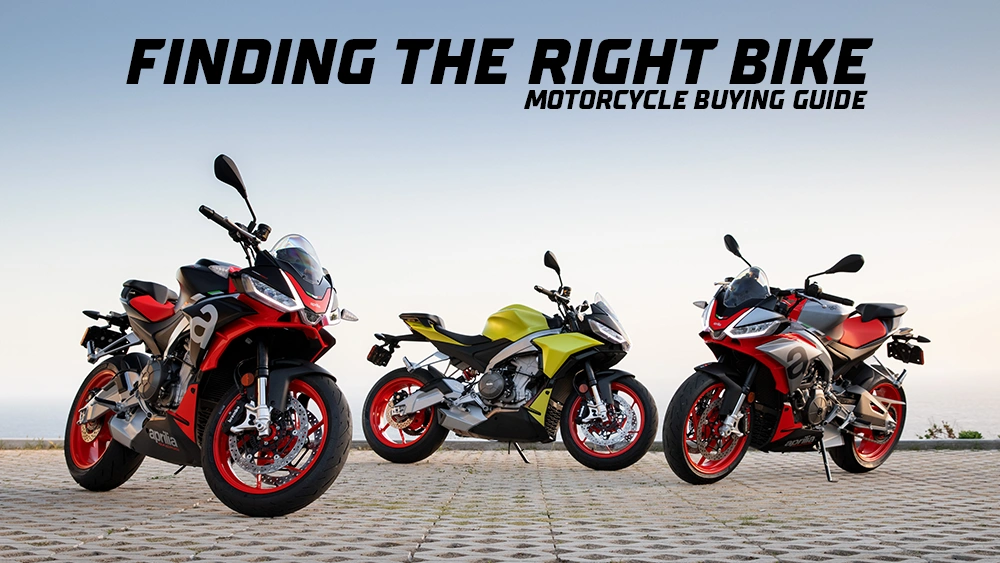
Find the Bike That Fits Your Ride.
Buying a motorcycle is about much more than choosing an engine size or picking the bike that looks the fastest. The right motorcycle should match how you ride, where you ride, your experience level, and the kind of experience you want every time you turn the key.
Thinking About Buying a Motorcycle in Ontario?
There is no shortage of motorcycles to choose from. Lightweight standards, aggressive sport bikes, comfortable touring machines and practical scooters can all deliver completely different experiences on the road.
That is why the best place to start is not horsepower, displacement or brand. Start with how you actually plan to ride.
At Grand River Power Sports in Brantford, we help riders from across Southern Ontario find motorcycles that fit their experience, confidence and riding goals. Whether you're looking at a Kawasaki street bike, an Aprilia sport machine, a Moto Guzzi adventure or touring motorcycle, or a Vespa or Piaggio scooter for getting around town, the right choice starts with understanding what you want from your ride.
Quick Answer: What Motorcycle Should I Buy?
There is no universal "best" motorcycle. Two riders with the same experience level may be much better suited to completely different bikes.
1. Start With How You Plan to Ride
Your riding environment should influence your motorcycle choice just as much as the motorcycle itself.
Daily & Urban Riding
If your motorcycle is going to be your everyday transportation, easy handling and comfort can matter more than outright performance. Scooters such as Vespa and Piaggio models are particularly well suited to urban environments, while smaller standard motorcycles offer another practical option.
Weekend & Backroad Riding
If the motorcycle is your escape from the work week, look for a machine that feels natural in corners, has comfortable ergonomics and gives you enough performance to keep the ride exciting without overwhelming you.
Long-Distance Riding
Long days in the saddle change the priorities. Wind protection, seating position, suspension, fuel range, luggage and passenger comfort become much more important once your ride stretches across Ontario.
Sport & Performance
If acceleration, cornering and track-inspired styling are what drew you to motorcycles in the first place, sport and naked performance bikes deliver a very different experience from a commuter or touring machine.
2. Don't Choose a Motorcycle by CC Alone
Engine displacement is useful, but it should never be the only measurement you use when shopping for a motorcycle.
A motorcycle's physical size, weight, seat height, gearing, throttle response, chassis design and power delivery can dramatically change how it feels to ride. A well-designed middleweight can be far easier to manage than a larger motorcycle with a more aggressive power delivery.
Smaller Displacement
Often a great starting point for newer riders and urban commuters. These bikes can be lighter, easier to manoeuvre and less intimidating while riders build experience.
Middleweight
This is where many riders find an excellent balance of usable performance, highway capability, manageable size and everyday versatility.
Large Displacement
Larger engines can deliver serious performance and relaxed highway cruising, but they can also bring additional weight, cost and insurance considerations.
3. Choose Your Motorcycle Style
Standard & Naked
Upright ergonomics and a broad range of capabilities make these motorcycles excellent all-rounders.
- Everyday riding
- Weekend backroads
- Comfortable riding position
- Versatile performance
Sport Bikes
Sport bikes put greater emphasis on acceleration, cornering, chassis response and aerodynamic styling.
- Performance riding
- Sportier ergonomics
- Sharper handling
- Track-inspired design
Adventure & Touring
Designed for riders who want to cover serious kilometres while keeping comfort and versatility high on the priority list.
- Long-distance riding
- Highway travel
- Wind protection
- Luggage and passenger capability
Scooters
Twist-and-go convenience, easy handling and practical urban packaging make scooters an excellent alternative to a traditional motorcycle.
- City commuting
- Easy parking
- Automatic transmission
- Practical everyday transportation
4. Understanding the Brands
Once you know the type of motorcycle you want, the manufacturer can help narrow the field. Each brand brings a different personality to the road.
Kawasaki
Kawasaki offers a broad motorcycle range, from approachable street bikes to sport and touring-oriented machines. It's a strong choice for riders looking for a combination of performance, everyday usability and model variety.
Aprilia
Aprilia has a strong performance identity. Models such as the RS 457 bring modern sport-bike technology and aggressive styling into a more approachable package, while the wider Aprilia range caters to riders looking for a more performance-focused experience.
Moto Guzzi
Moto Guzzi motorcycles stand out for their transverse V-twin character, distinctive styling and relaxed approach to road riding. The 2026 V85 family is especially focused on adventure and touring, while the Stelvio takes the concept further for riders looking for a larger adventure platform.
Vespa & Piaggio
Vespa and Piaggio bring a different approach to two-wheeled transportation. The emphasis is on easy urban mobility, style, manoeuvrability and practicality, making these scooters ideal for city riders and commuters.
5. Know Your Ontario Motorcycle Licence
Before you buy, make sure you understand where you are in Ontario's motorcycle licensing system.
Ontario uses graduated motorcycle licensing. New motorcycle riders enter the system with an M1, progress to an M2 after the Level One road test, and eventually qualify for a full Class M licence after the Level Two road test.
M1
Entry-level motorcycle licence following the required vision and knowledge testing. Restrictions apply, including no passengers and daylight-only riding.
M2
Obtained after passing the Level One road test. Riders have more privileges, including night riding and carrying passengers.
Class M
Obtained after completing the required Level Two period and passing the Level Two road test.
6. New vs. Used: Which Makes More Sense?
Why Buy New?
- Factory warranty
- Latest model-year technology
- No previous ownership history to investigate
- Potential financing opportunities
- Ability to choose your preferred colour and equipment
Why Buy Used?
- Lower purchase price
- More options at a specific budget
- Potentially lower depreciation after the initial purchase
- Access to discontinued or older models
- Opportunity to find an already-equipped motorcycle
If you're shopping used, don't stop at the asking price. Look at maintenance records, tire condition, brake condition, chain and sprocket wear, fluid leaks, accident history and overall mechanical condition.
7. Budget for More Than the Motorcycle
The purchase price is only one part of motorcycle ownership. Before signing the paperwork, build the rest of the ownership budget.
8. Avoid These Common Motorcycle Buying Mistakes
Buying Too Much Motorcycle
Bigger is not automatically better. A motorcycle that makes you nervous every time you ride it can slow down your learning and reduce your enjoyment.
Ignoring Ergonomics
Sit on the motorcycle. Check your reach to the handlebars, position of the foot controls, seat height and overall posture.
Shopping Only by Looks
A motorcycle can look incredible in a photo and still be the wrong motorcycle for your body, experience or intended use.
Forgetting Insurance
Sport-oriented motorcycles can have very different insurance costs from similarly sized standard or touring machines. Quote the bike before you commit.
9. Your Motorcycle Shopping Checklist
Before you make the final decision, make sure you've considered the things that matter after the excitement of the first test ride wears off.
Motorcycle Buying FAQ
What is the best motorcycle for a beginner?
There is no single engine size that is perfect for every beginner. Look for a motorcycle that is physically manageable, has predictable power delivery, fits your body and allows you to build confidence. Smaller motorcycles and approachable middleweights can both be excellent choices depending on the rider and model.
Is a 600cc motorcycle too much for a beginner?
It depends on the specific motorcycle. A 600cc sport bike can have a very different power delivery and riding position from a 600cc-class standard or touring motorcycle. Consider the entire motorcycle rather than the displacement number alone.
What type of motorcycle is best for commuting?
For urban commuting, scooters and smaller standard motorcycles can be excellent choices. Automatic scooters such as Vespa and Piaggio models can be particularly convenient for stop-and-go city riding.
Is motorcycle insurance expensive in Ontario?
Motorcycle insurance costs vary considerably. Ontario's insurance regulator notes that factors including age, driving record, riding frequency, rider training, location and the type, size and age of the motorcycle can affect the premium.
Should I buy a new or used motorcycle?
Both can make sense. New motorcycles provide factory warranty and the latest equipment, while used motorcycles can provide a lower entry price. When buying used, condition and maintenance history are extremely important.
Do I need a motorcycle licence to ride in Ontario?
Yes. To ride a motorcycle on public roads in Ontario, you need a valid motorcycle licence. New riders progress through the M1, M2 and full Class M licensing system.
Ready to Find Your Motorcycle?
The right motorcycle should make you want to ride. Whether you're looking for your first bike, upgrading to something sportier, planning longer Ontario adventures or searching for an easy everyday commuter, the team at Grand River Power Sports can help you compare your options and find a motorcycle that fits.